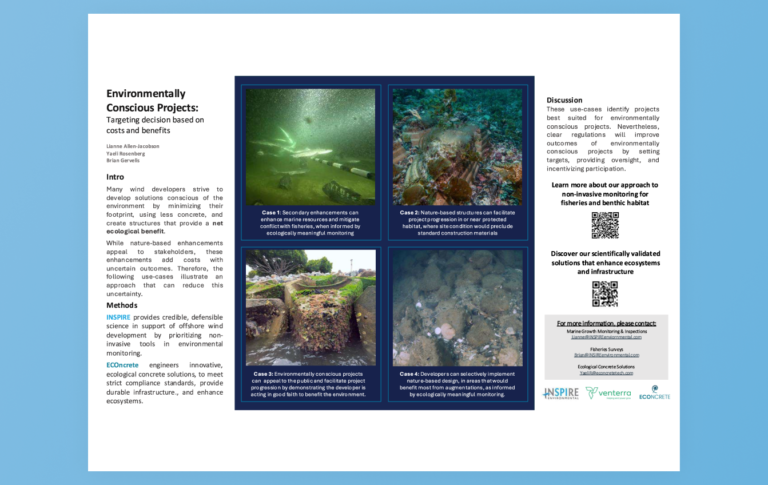
Environmentally Conscious Projects
INSPIRE provides credible, defensible science in support of offshore wind development by prioritizing non-invasive tools in environmental monitoring.
Browse our publication resources below.
INSPIRE provides credible, defensible science in support of offshore wind development by prioritizing non-invasive tools in environmental monitoring.
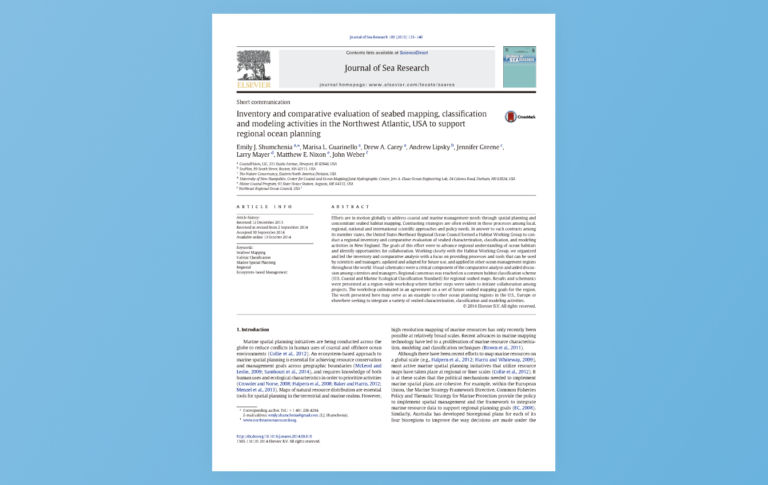
Efforts are in motion globally to address coastal and marine management needs through spatial planning and concomitant seabed habitat mapping. Contrasting strategies are often evident in these processes among local, regional, national and international scientific approaches and policy needs.
This study focuses on infaunal bioturbation, as it has been shown to play a vital role in regulating marine sediment geochemical and physical properties as well as affecting ecosystem function.
Centuries of exclusion have resulted in a tangible human diversity deficit, where the diversity of oceanographers does not represent the global diversity of people impacted by ocean processes.
The 2010 Deepwater Horizon incident was a massive deep-sea oil spill and resulted in deposition of hydrocarbons at the seafloor surface. Soft sediment benthic macrofauna provide critical global ecosystem services, and little is known about their recovery trajectories from similar disturbances in the deep sea.
We present a multi-modal approach consisting of multibeam bathymetry, video, and still imagery that collectively provides the knowledge base necessary to perform impact assessments in glacial moraine habitats largely composed of hard substrata.
In book: Reference Module in Earth Systems and Environmental Sciences (pp.752-764) Edition: Encyclopedia of Ocean Sciences, third edition Publisher: Elsevier
Organic matter (OM) production and degradation is important in coastal estuaries, and OM fate is strongly influenced by the coupled interactions of bioturbation and biogeochemistry. From April to September 2013 sediment cores and a benthic observing system, Wormcam, were used to investigate the in situ relationship of biogeochemistry and macrofauna bioturbation in Cape Lookout Bight North Carolina.
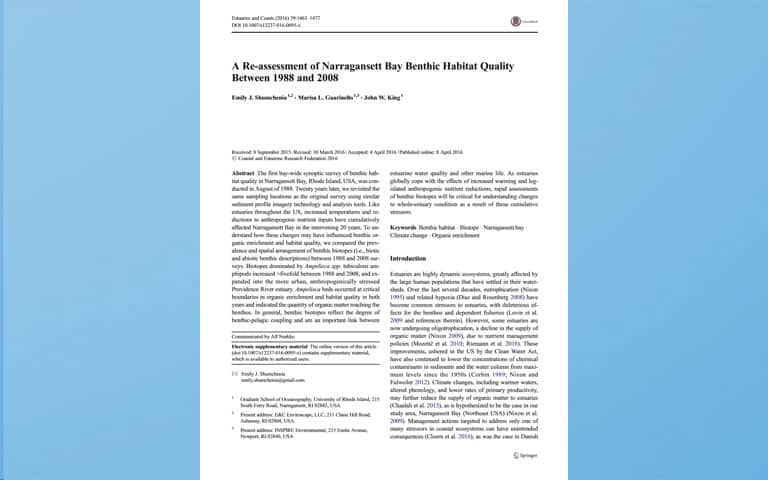
The first bay-wide synoptic survey of benthic habitat quality in Narragansett Bay, Rhode Island, USA, was conducted in August of 1988. Twenty years later, we revisited the same sampling locations as the original survey using similar sediment profile imagery technology and analysis tools.
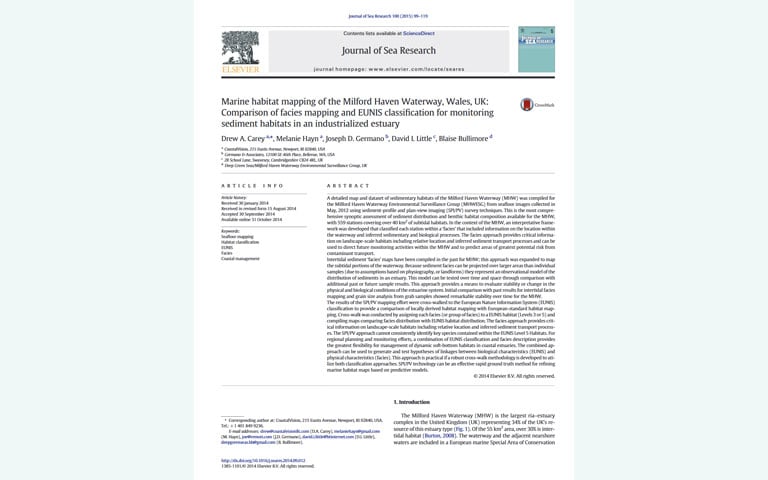
A detailed map and dataset of sedimentary habitats of the Milford Haven Waterway (MHW) was compiled for the Milford Haven Waterway Environmental Surveillance Group (MHWESG) from seafloor images collected in May, 2012 using sediment-profile and plan-view imaging (SPI/PV) survey techniques.