Publications
Expertise
Sector
Publications |
12.18.24
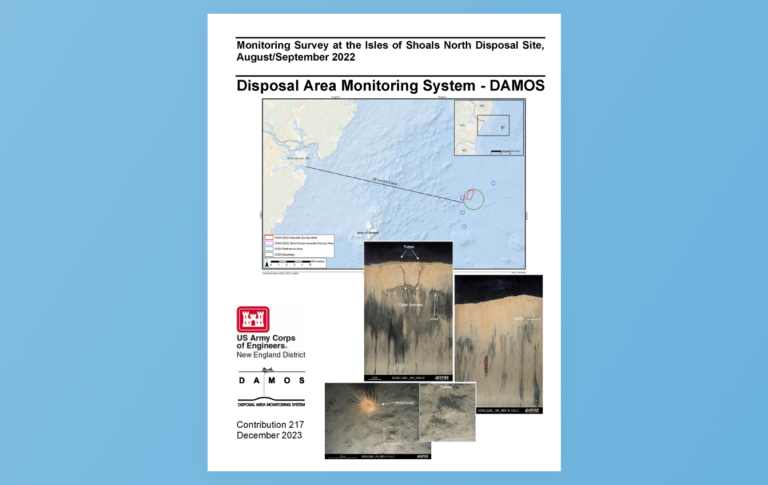
Monitoring Survey at the Isles of Shoals North Disposal site, August/September 2022
Publications |
12.18.24
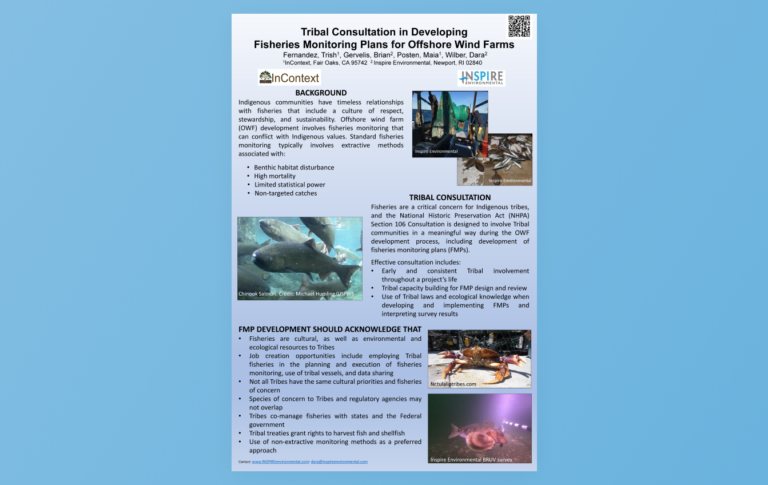
Tribal Consultation in Developing Fisheries Monitoring Plans for Offshore Wind Farms
Indigenous communities have timeless relationships with fisheries that include a culture of respect, stewardship, and sustainability. Offshore wind farm (OWF) development involves fisheries monitoring that can conflict with Indigenous values.
Publications |
9.14.24
Reshaping perspectives of deep-sea benthic function
Publications |
9.13.24
Mapping Seafloor Sediment Distributions Using Public Geospatial Data and Machine Learning to Support Regional Offshore Renewable Energy Development
Given the rapid expansion of offshore wind development in the United States (US), the accurate mapping of benthic habitats, specifically surficial sediments, is essential for mitigating potential impacts on these valuable ecosystems.
Publications |
9.12.24
The Wind, Wings, Fins, and Shells: Innovations to Support Biodiversity in Offshore Wind – SeaAhead in collaboration with Orsted and Venterra 2024
This whitepaper focuses on the potential of offshore wind innovation in biodiversity protection, highlights technology and startups in the “bluetech” landscape, and classifies startups based upon their impact in the sector. It is intended to serve as a roadmap for venture investors as they engage with relevant startups.
Brochures |
9.10.24
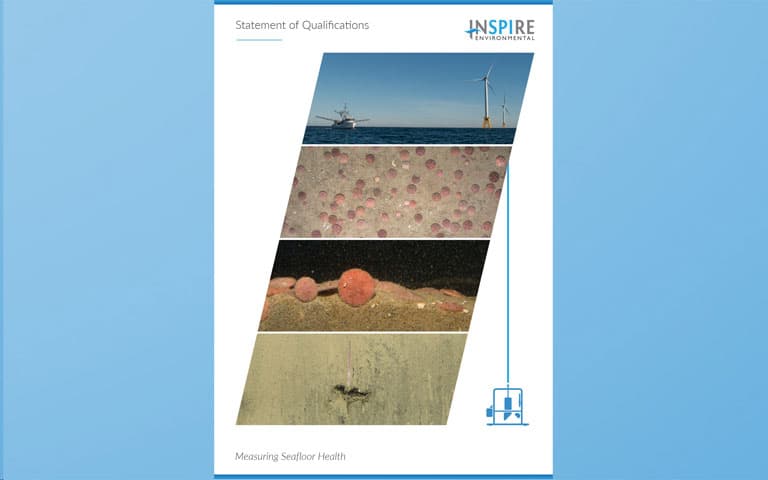
INSPIRE’s Statement of Qualifications (SOQ)
Seeing is believing, and since the earliest days of oceanography, marine scientists have sought to accurately represent and understand the complex ecology of the seafloor. Interpreting data from grab samples and cores, scientists have attempted to tell a complete story of the largest ecosystem on earth. However, removed from context, these samples can misinform seafloor monitoring programs and underrepresent the complex dynamics of the seafloor


Publications |
9.9.24
Bioturbation in a declining oxygen environment, in situ observations from Wormcam
This study focuses on infaunal bioturbation, as it has been shown to play a vital role in regulating marine sediment geochemical and physical properties as well as affecting ecosystem function.